


Lessons from the festival
Why are you visiting the festival, what appealed to you most?
Cor-Jan van der Perk (researcher):
"I think the social relevance of research is very important. My research focuses on how to properly support the parents of children who are returning home after a hospital stay. As a healthcare provider, you have blind spots; you are so familiar with your own field that you can sometimes be too quick to assume that everything is clear to the parents. That will be my valorisation: offering support from their perspective."
Helena Poelkamp (Vascular Surgery Team Leader):
"I wanted to know more about what the term 'valorisation' actually means. The festival gave me a good impression: the topics, the struggles, the resources you can look up. I gained some interesting insights in the workshop 'AI and data-driven healthcare'. It was very inspiring to work on a case study with colleagues from other disciplines!"
Julio Klaverweide (Strategy Department Advisor):
“Amsterdam UMC has a very broad range of valorisations, which was clearly evident at the festival. It was great to see all those examples at the market. I also found the presentations inspiring. The festival helps to make people aware of the importance and possibilities of making a social impact.”
Carla van Heck (business developer IXA):
"It's fun to work on innovation: how do you get to the point where it really helps patients? When I see all these ideas here at the festival, developed by doctors and scientists alongside everything else they already do, it's impressive! I previously worked as a technology transfer officer elswhere; now I focus on medical technology in the IXA team. My job is to make sure they get ahead."
Muhammed Akbar Tirtosudiro (visiting pediatrician):
“We are here on a three-month visit with a group of pediatricians from Indonesia. We hadn't really thought about valorisation before, but it's a very interesting concept to add social and economic value to scientific results. In Indonesia, we are currently working on a campaign about translation. Valorisation is an excellent way to ensure that research also finds its way into society.”

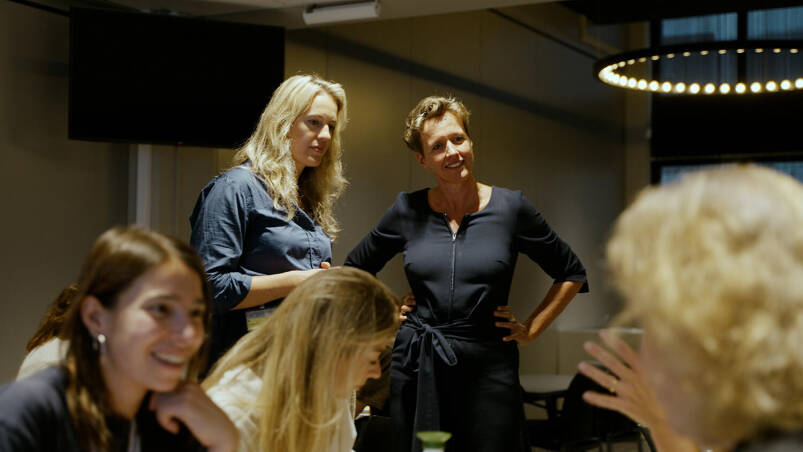
Tessa Roseboom
(Future Fenerations Officer, Valorisation core team)
“You can make an impact in your own way, with your own talents.”
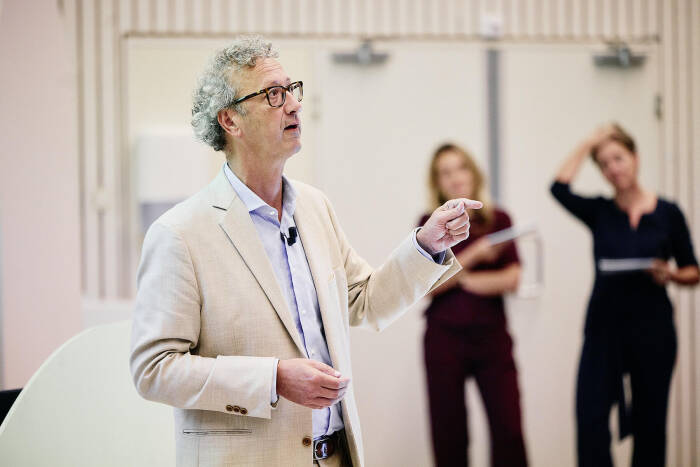
Hans van Goudoever
(Chairman of the Board of Directors)
“By explicitly naming valorisation as a fourth core task, there will be more emphasis on the societal impact of our work.”
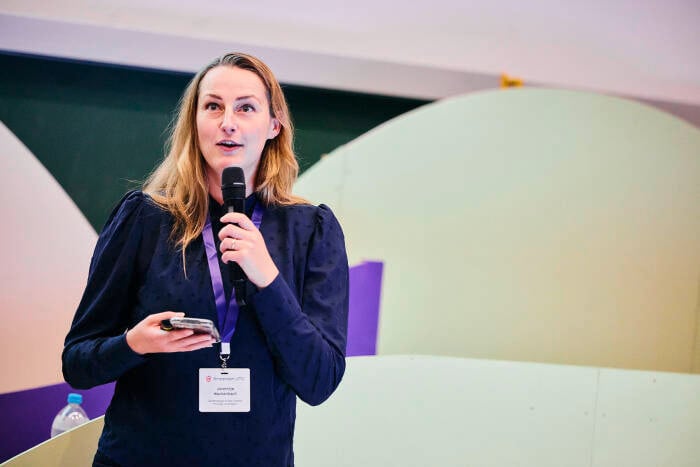
Joreintje Mackenbach
(Associate Professor of Epidemiology and Data Science)
“Think carefully about who you want to reach and how.”

Watch the aftermovie with impressions of the Valorisation Festival here

January 2026 | © Amsterdam UMC 2026



Cor-Jan van der Perk (researcher):
"I think the social relevance of research is very important. My research focuses on how to properly support the parents of children who are returning home after a hospital stay. As a healthcare provider, you have blind spots; you are so familiar with your own field that you can sometimes be too quick to assume that everything is clear to the parents. That will be my valorisation: offering support from their perspective."
Helena Poelkamp (Vascular Surgery Team Leader):
"I wanted to know more about what the term 'valorisation' actually means. The festival gave me a good impression: the topics, the struggles, the resources you can look up. I gained some interesting insights in the workshop 'AI and data-driven healthcare'. It was very inspiring to work on a case study with colleagues from other disciplines!"
Julio Klaverweide (Strategy Department Advisor):
“Amsterdam UMC has a very broad range of valorisations, which was clearly evident at the festival. It was great to see all those examples at the market. I also found the presentations inspiring. The festival helps to make people aware of the importance and possibilities of making a social impact.”
Carla van Heck (business developer IXA):
"It's fun to work on innovation: how do you get to the point where it really helps patients? When I see all these ideas here at the festival, developed by doctors and scientists alongside everything else they already do, it's impressive! I previously worked as a technology transfer officer elswhere; now I focus on medical technology in the IXA team. My job is to make sure they get ahead."
Muhammed Akbar Tirtosudiro (visiting pediatrician):
“We are here on a three-month visit with a group of pediatricians from Indonesia. We hadn't really thought about valorisation before, but it's a very interesting concept to add social and economic value to scientific results. In Indonesia, we are currently working on a campaign about translation. Valorisation is an excellent way to ensure that research also finds its way into society.”
Why are you visiting the festival, what appealed to you most?
“Think carefully about who you want to reach and how.”
"Cardiovascular disease accounts for the largest disease burden in the Netherlands. This can be prevented to a large extent by promoting a healthy lifestyle. However, we know that it is not enough to tell people how to eat healthily," says Joreintje Mackenbach.
So how can you make an impact by promoting a healthy lifestyle? How can you put scientific insights about unhealthy eating patterns into practice? In her presentation, she shares the lessons she learned in her quest. For example: start small and quickly show something to the outside world; this can easily lead to valuable new contacts and ideas. Seek collaborations to increase attention and visibility. Then use the impact you have achieved as leverage for new relationships in science and policy. With every choice you make, it is important to keep in mind exactly who you want to reach and how.
Together with healthcare professionals and many other parties, Joreintje Mackenbach is committed to a healthy society. For example, the national Healthy Living Network develops tools and strategies to help the public, policymakers, businesses, and decision-makers on their way to a healthier future.
Joreintje Mackenbach
(Associate Professor of Epidemiology and Data Science)
“By explicitly naming valorisation as a fourth core task, there will be more emphasis on the societal impact of our work.”
At Amsterdam UMC, we attach great importance to valorisation. This is now laid down in our long-term strategy, A healthy future for all, which was launched in early 2025. Valorisation plays an incredibly important role, but this was never explicitly stated. By naming it as our fourth core task, we are placing greater emphasis on how our work and knowledge can actually benefit the outside world: in our region, in the Netherlands, and internationally."
"My dream is that this core task will become deeply ingrained in our organization. That everyone will be aware of it and know that there is a good organization in place to offer support in advancing their ideas."
Hans van Goudoever
(Chairman of the Board of Directors)
“You can make an impact in your own way, with your own talents.”
"Being of value to society is what the term 'valorisation' stands for. It's not about making money with your knowledge, but primarily about being of value with your knowledge. Usually that's without profit, and sometimes it's for profit, which is fine too: ultimately, the organization also has to be financially healthy. But the key question is: 'How can I use my knowledge to contribute to a healthy future for all? You can do that in your own way, using your own talents."
Tessa Roseboom
(Future Fenerations Officer, Valorisation core team)
Lessons from the festival
Watch the aftermovie with impressions of the Valorisation Festival here