Societal Advisory Board
Valorisation is not something you do alone. Quite the contrary. It is about connecting academia and society, about scientific knowledge that adds value to society. The Societal Advisory Board monitors developments closely, says Anna van der Hulst.
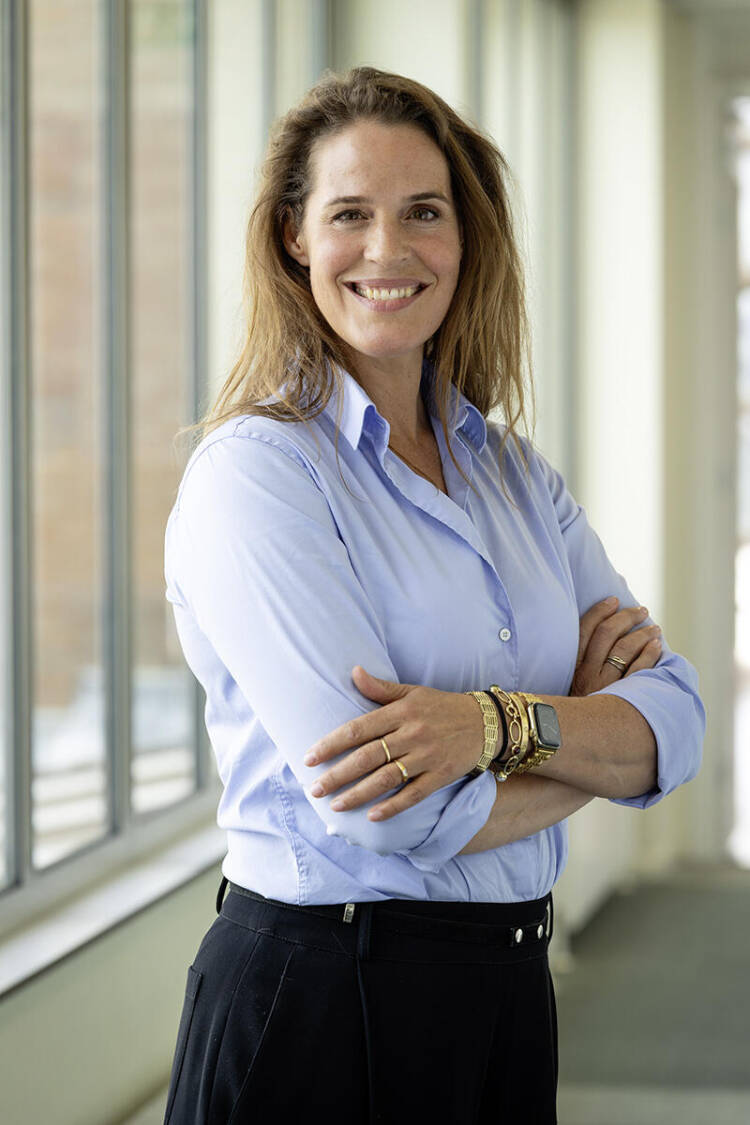
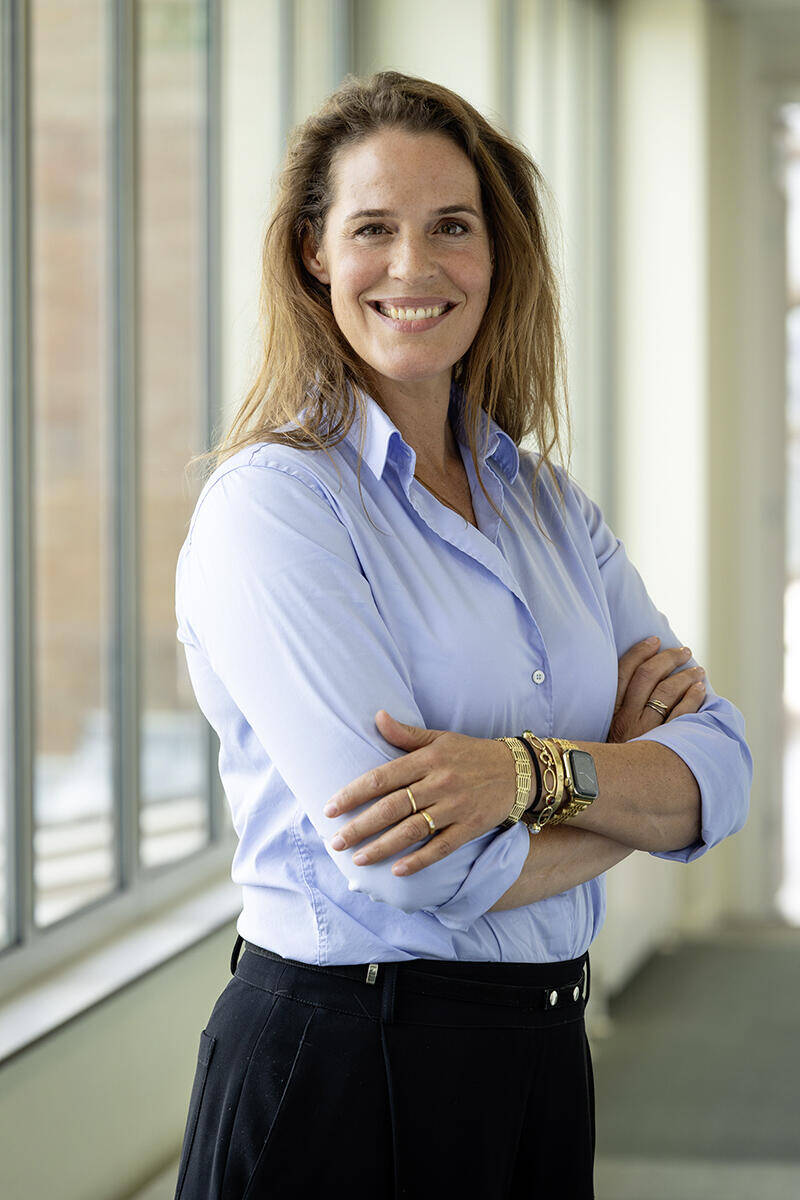
Anna van der Hulst director of the GGD Amsterdam
‘Holding up a mirror’
The external experts of the Societal Advisory Board provide the Valorisation Board with solicited and unsolicited advice. Anna van der Hulst, director of the GGD Amsterdam (Public Health Service of Amsterdam), is one of the 12 members of this advisory board. She knows the world of healthcare well, having previously worked at the Emma Children's Hospital, the women's healthcare department of Amsterdam UMC, and OLVG. The other members all have different backgrounds. "It's great that we bring such diverse experiences to the table; members with an entrepreneurial background, for example, contribute knowledge about commercialization. That's not exactly my area of expertise, but it is important."

Disseminating and connecting
The GGD is a hinge between the social domain and the world of healthcare, cure and care, she says. "We need a resilient society, and Amsterdam UMC has the knowledge to help with that. It is important to disseminate the knowledge that is available there more widely in society and to ensure that it connects well with what already exists. That's why I'm in the Societal Advisory Board."
Throughout history, we have become increasingly healthy and the standards for healthy behavior have become increasingly high, says Van der Hulst. As a university medical center in the capital, she believes Amsterdam UMC has a duty and responsibility to contribute to raising those standards through scientific knowledge and education. "I call it 'health in all policies' – health must be reflected in everything. Amsterdam UMC is an incredibly important player in this."
Vulnerable groups
This is even more important, she says, given the challenges facing society. "If we are not careful, the most vulnerable groups will no longer be able to receive the best care. We are heading for a slow-motion disaster due to factors such as an aging population and changing healthcare needs. The health disparities in our region, but certainly also in Amsterdam Zuid Oost—the backyard of Amsterdam UMC—are very large. As Amsterdam UMC, you also bear a certain responsibility for this. Valorisation is really part of that."
With social partners
The Societal Advisory Board has not been active for very long. The intention is for the members of the Societal Advisory Board to keep the Valorisation Board and the policymakers at Amsterdam UMC on their toes and to hold up a mirror to them from time to time. "We do that in our discussions. We have already had a number of sessions in which we were consulted – mainly about strategic choices – and asked for our opinion. Because it may be all very well to come up with ideas within the walls of Amsterdam UMC, but it is important to do so in collaboration with social partners."
Reaching a broad audience
Van der Hulst also sees her role within the Societal Advisory Board to ensure that all parties involved in the valorisation process can find common ground. After all, scientists, researchers, governments, policymakers, and social workers do not always speak the same language. "If you really want to make an impact on society, you have to connect with the language and skills of other stakeholders. As director of the GGD, I have a good overview of all these parties. I see it as my job to ensure that this societal impact is also achieved for a large group of people."
During the COVID period, the GGD learned many lessons about how to effectively reach the population and how to make an impact. "The GGD focuses on public health. If you want to have an impact on those larger groups through valorisation, we have a lot of knowledge about that. I am happy to contribute that knowledge."
January 2026 | © Amsterdam UMC 2026



With social partners
The Societal Advisory Board has not been active for very long. The intention is for the members of the Societal Advisory Board to keep the Valorisation Board and the policymakers at Amsterdam UMC on their toes and to hold up a mirror to them from time to time. "We do that in our discussions. We have already had a number of sessions in which we were consulted – mainly about strategic choices – and asked for our opinion. Because it may be all very well to come up with ideas within the walls of Amsterdam UMC, but it is important to do so in collaboration with social partners."
Reaching a broad audience
Van der Hulst also sees her role within the Societal Advisory Board to ensure that all parties involved in the valorisation process can find common ground. After all, scientists, researchers, governments, policymakers, and social workers do not always speak the same language. "If you really want to make an impact on society, you have to connect with the language and skills of other stakeholders. As director of the GGD, I have a good overview of all these parties. I see it as my job to ensure that this societal impact is also achieved for a large group of people."
During the COVID period, the GGD learned many lessons about how to effectively reach the population and how to make an impact. "The GGD focuses on public health. If you want to have an impact on those larger groups through valorisation, we have a lot of knowledge about that. I am happy to contribute that knowledge."
Disseminating and connecting
The GGD is a hinge between the social domain and the world of healthcare, cure and care, she says. "We need a resilient society, and Amsterdam UMC has the knowledge to help with that. It is important to disseminate the knowledge that is available there more widely in society and to ensure that it connects well with what already exists. That's why I'm in the Societal Advisory Board."
Throughout history, we have become increasingly healthy and the standards for healthy behavior have become increasingly high, says Van der Hulst. As a university medical center in the capital, she believes Amsterdam UMC has a duty and responsibility to contribute to raising those standards through scientific knowledge and education. "I call it 'health in all policies' – health must be reflected in everything. Amsterdam UMC is an incredibly important player in this."
Vulnerable groups
This is even more important, she says, given the challenges facing society. "If we are not careful, the most vulnerable groups will no longer be able to receive the best care. We are heading for a slow-motion disaster due to factors such as an aging population and changing healthcare needs. The health disparities in our region, but certainly also in Amsterdam Zuid Oost—the backyard of Amsterdam UMC—are very large. As Amsterdam UMC, you also bear a certain responsibility for this. Valorisation is really part of that."
Anna van der Hulst director of the GGD Amsterdam
‘Holding up a mirror’
The external experts of the Societal Advisory Board provide the Valorisation Board with solicited and unsolicited advice. Anna van der Hulst, director of the GGD Amsterdam (Public Health Service of Amsterdam), is one of the 12 members of this advisory board. She knows the world of healthcare well, having previously worked at the Emma Children's Hospital, the women's healthcare department of Amsterdam UMC, and OLVG. The other members all have different backgrounds. "It's great that we bring such diverse experiences to the table; members with an entrepreneurial background, for example, contribute knowledge about commercialization. That's not exactly my area of expertise, but it is important."
Societal Advisory Board
Valorisation is not something you do alone. Quite the contrary. It is about connecting academia and society, about scientific knowledge that adds value to society. The Societal Advisory Board monitors developments closely, says Anna van der Hulst.