Valorisation for
a healthy future
What are the benefits of valorisation? These four examples show how each valorisation strategie can generate societal impact.
Navigate to:
Outside-in
Inside-out
Partnerships
Societal outreach

Inside out:
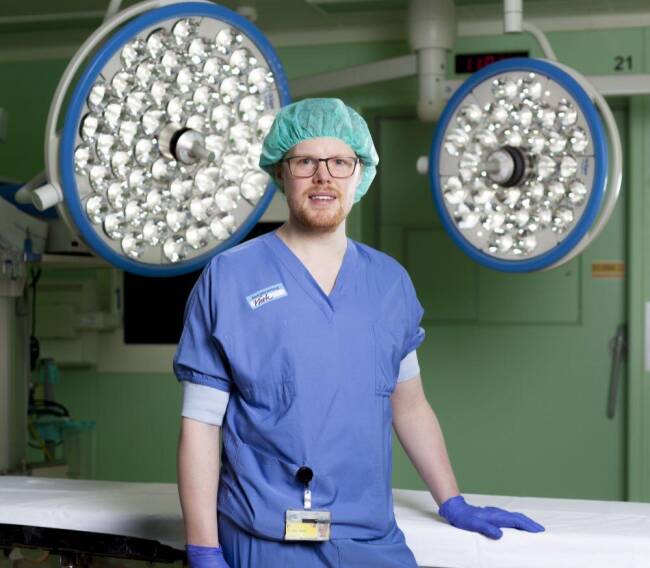
Niek Sperna Weiland creates impact through significant CO2 reduction
The F-gases used to put patients to sleep for surgery are greenhouse gases that are many times more potent than CO2. Anesthesiologist Niek Sperna Weiland therefore advocates the use of intravenous anesthesia. Depending on the type of F-gas, this results in a CO2 reduction of 80 to 98 percent.
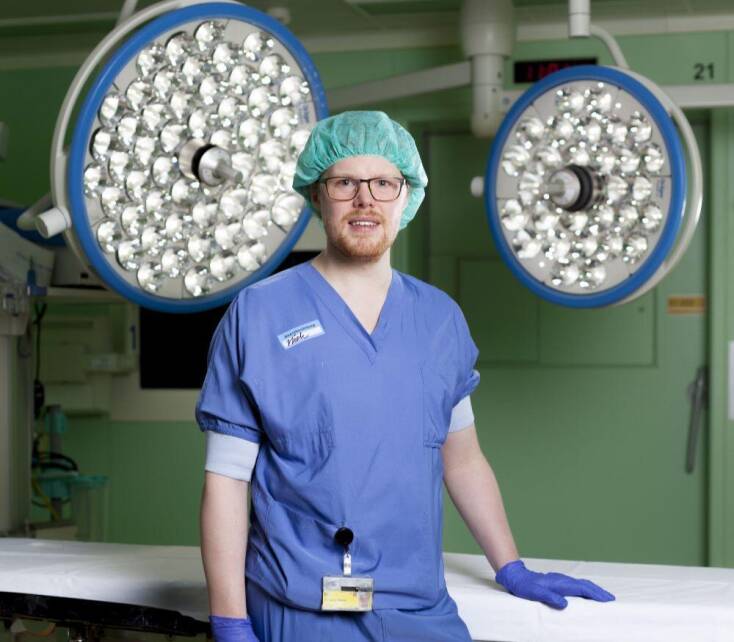
But is intravenous anesthesia just as safe for patients? PhD candidate Jasper Kampman compiled all findings from the literature in a meta-analysis. "This showed that there is no difference in patient safety. On the contrary, after intravenous anesthesia, people are less nauseous and less confused. This leads to better recovery. Because patients spend less time in the recovery room and need less medication for nausea, healthcare is also cheaper," explains Niek Sperna Weiland.
Jasper Kampman and Niek Sperna Weiland naturally wanted to spread this message as widely as possible. "Together with specialists in the field of communication and behavioral change, we set up a campaign for anesthesiologists under the slogan 'Intravenous if possible, inhalation if necessary.'
The guidelines of the Dutch Society for Anesthesiology have since been amended: "Every department must now have a protocol stating that intravenous anesthesia is the first choice. Anesthesiologists can add a list of indications for vapor anesthesia at their own discretion, because for some patients this remains necessary."
How does this valorisation contribute to a 'healthy future for all'?
Compared to vapor anesthesia (with F-gases), intravenous anesthesia reduces CO2 emissions by 80 to 98 percent. This is an important contribution to cleaner and healthier air, considering that one hour of vapor anesthesia can produce as many emissions as driving 1,500 kilometers by car.
The more hospitals opt for intravenous anesthesia, the cleaner the air will be. That is why the message has been further disseminated to all hospitals through a communication campaign; the professional association has already adapted its guidelines to these findings.
Pollution does not exactly contribute to public health. The healthcare sector is one of the biggest polluters in the Netherlands and is responsible for 7 percent of total CO2 emissions; that has to come down. (By way of comparison, the aviation sector contributes 3 percent to emissions.)
[source: Amsterdam UMC]
More examples of inside-out valorisation:
Fewer child deaths and fewer children in hospital worldwide thanks to protective vaccination against the RS virus
Amsterdam UMC uses a special 3D printer to make customized ventilator masks for children in the ICU; in the future, this can be scaled up to other groups of patients who benefit from customized solutions.
A prediction model for epilepsy that was developed in collaboration with researchers elsewhere in the world and is now available free of charge to all healthcare providers worldwide.


Outside-in:
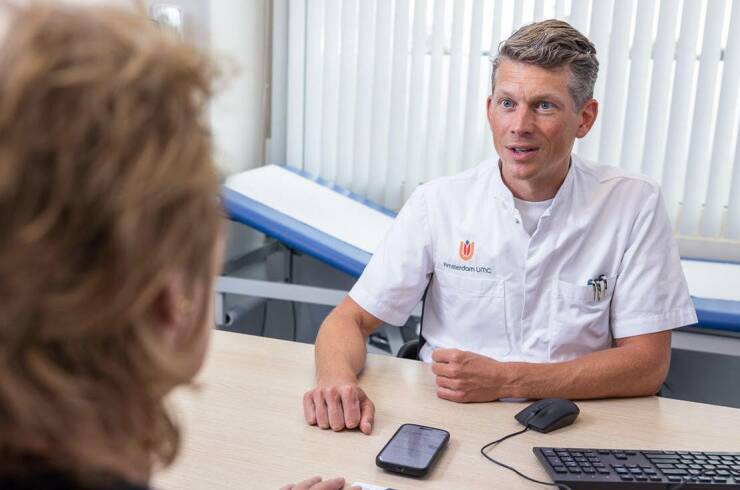
Cardiologist Michiel Winter creates impact through HartWacht
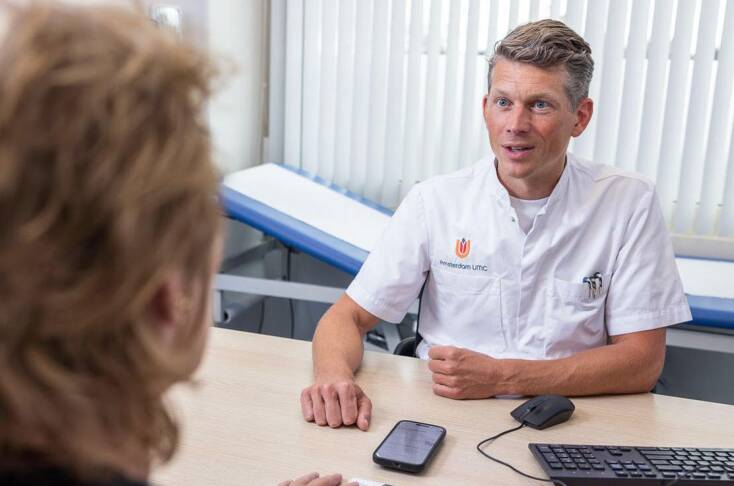
"With the HartWacht program, patients can measure their own blood pressure, heart rate, and soon their cholesterol levels as well. They can even record an electrocardiogram (ECG). As a result, a significant part of outpatient care can now simply take place at home," explains cardiologist Michiel Winter.
He helped develop this e-health program for patients with cardiac arrhythmia, heart failure, hypertension, or an elevated cardiovascular risk profile. "Thanks to this program, patients only need to see a cardiologist if abnormal values are found, for further investigation." The program was developed in 2016 by Cardiologie Centra Nederland (CCN) in collaboration with Heart for Health; it was introduced at Amsterdam UMC in 2024.
Patients respond positively about its use, he says. "If an abnormal measurement is submitted, we contact them. People find it quite unusual to receive a spontaneous phone call from their specialist, while they may be sitting somewhere in France enjoying a cup of coffee on a terrace. But for us, it's an extremely small effort compared to the intensity of the 'traditional' approach, where everyone came to the consultation room for a routine measurement."
The patients' measurements are received by CCN's medical service center, where they are assessed by a team of e-health specialists. In the event of abnormalities, the data is forwarded to the treating specialist. "A perfect example of an e-Health platform developed elsewhere that has been introduced and scaled up at Amsterdam UMC," concludes Michiel Winter.
How does this valorisation contribute to a ‘healthy future for all’?
Diagnoses can be made more quickly and treatment can start sooner.
Patients no longer need to go to the hospital to be diagnosed or start treatment.
The health of patients at home is continuously monitored, whereas previously patients had to wait until they could be admitted to hospital.
o Fewer patients end up in the emergency room because they can send all relevant data to the hospital from home and receive remote advice.
o Thanks to self-measurements, patients become more aware of their lifestyle and see the positive effect of their treatment.
More examples of outside-in valorisations:
Commissioned by Zorgverzekeraars Nederland (Health Insurers Netherlands), Medicijn voor de Maatschappij (Medicine for Society) is investigating how certain promising medicines can be made available more quickly and at an acceptable price with the pilot project Orphan Drug Access Protocol (ODAP).
Led by Amsterdam UMC, a consortium is looking for solutions to the shortage of liver donors.
Neurologist Jort Vijverberg is collaborating with other parties to investigate the prevention and treatment of Alzheimer's disease.

Partnerships:
Jaap Bonjer creates impact through partnerships in educational innovation
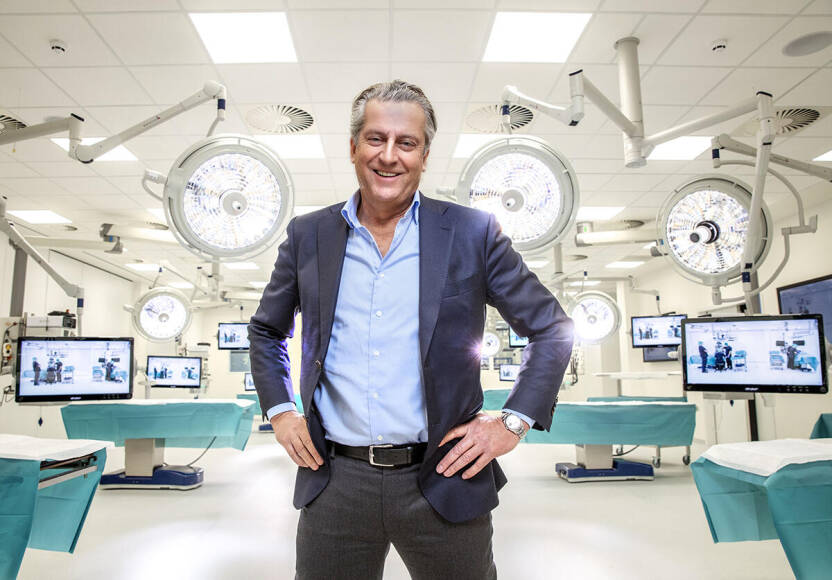
During their training, aspiring pilots log countless 'flight hours' in the simulator before actually taking to the skies. What if future doctors, lab technicians, and other healthcare providers were trained in the same way? That idea led to the launch of a major national innovation project in 2021: DUTCH (Digital United Training Concepts in Healthcare).
DUTCH is a large-scale public-private partnership between national healthcare training programs, the business community, government, and experts in the field of simulation and artificial intelligence. Within Amsterdam UMC, surgeon Jaap Bonjer is committed to this cause. "If you can offer virtual reality and other digital working methods in the training programs for surgical assistants, anesthetists, and radiodiagnostic technicians, students can train in a low-pressure environment," he explains. "This allows students to reach the required level more quickly and therefore be deployed sooner. At the same time, it requires fewer supervision hours, so practical supervisors have more time for healthcare, which means shorter waiting lists."
DUTCH wants to scale up to healthcare professions inside and outside the hospital in the near future. Bonjer: "It is a powerful combination of research & development, scientific testing, sales channels, and targeted investment opportunities. Together, all parties form an ecosystem that can grow into a national platform for simulation-driven healthcare training and that can scale up internationally."
Jaap Bonjer is also the founder and CEO of the Amsterdam Skills Center for Health Sciences (ASC), where both beginners and experienced professionals from around the world can gain knowledge and practice skills using innovative digital and robotic techniques. The ASC has 23 operating rooms with cutting-edge equipment where more than 7,000 healthcare professionals from around the world are trained each year.
How do these valorisations contribute to a ‘healthy future for all’?
Healthcare provision in the Netherlands is under pressure due to staff shortages. Simulation-based education reduces waiting times and increases healthcare capacity. With its digital educational innovations, DUTCH is helping to ensure that students can be trained faster and better. At the same time, it takes less time for clinical supervisors, allowing them to devote more time to providing care.
The joining of forces within DUTCH prevents hospitals and colleges from having to reinvent the wheel; together with innovative learning technology companies, learning solutions are developed that improve both efficiency and quality. In the future, DUTCH may also scale up internationally.
Countries with lower incomes will have access to a learning environment that is inexpensive, mobile, and easy to use on location.
With its 'Teach the Teacher' courses, the ASC ensures that knowledge can be disseminated further and further.
More examples of partnerships:
Charlotte Teunissen (professor of Neurochemistry) collaborated with an international group of practitioners and researchers to develop new guidelines for diagnosing Alzheimer's disease.


Societal outreach:
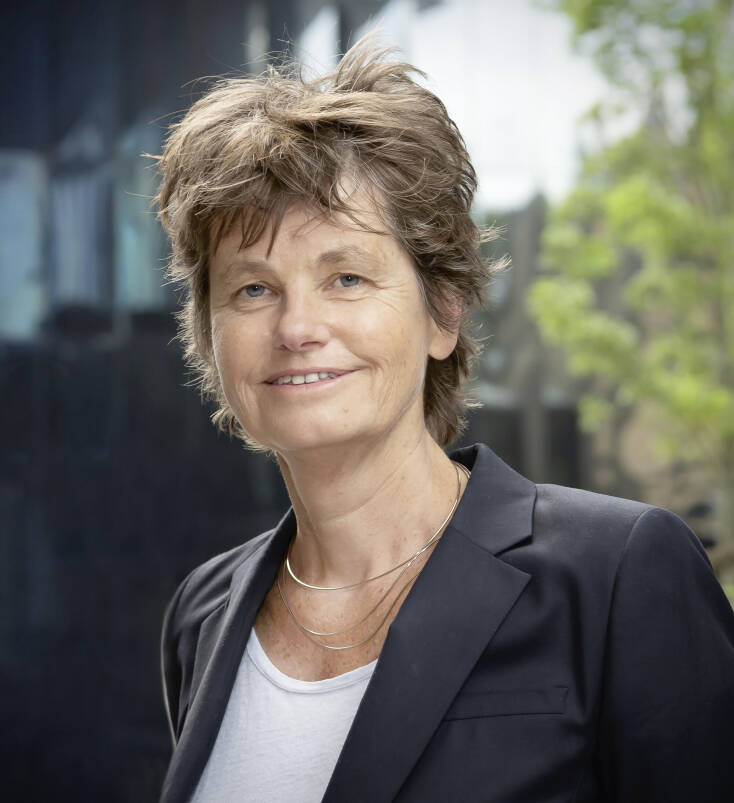
Karien Stronks creates societal impact through a public leadership role
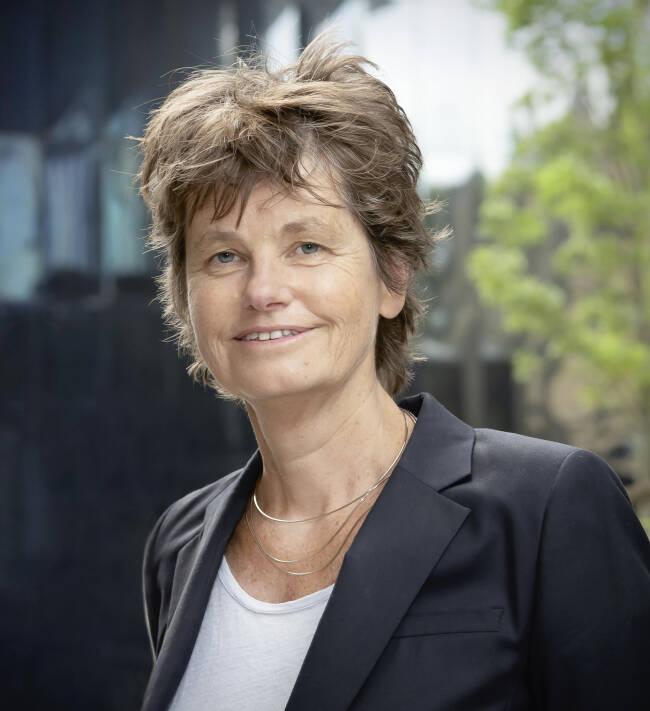
How is the health of the population doing and how can it be improved? How do health disparities between groups of people arise and what is needed to reduce those differences? These questions form the common thread in the career of Karien Stronks, professor of Public Health.
In early 2025, in addition to her work as a professor, she became chair of the Health Council of the Netherlands. Given her background as a political scientist and health scientist, this position seems tailor-made for her. "As a scientist, I have always paid a lot of attention to communicating scientific findings."
The Health Council is an independent scientific advisory body for the government and parliament in the broad field of public health and healthcare. This includes advice on vaccinations and population screening, but also, for example, the effects of the living environment on health. Karien Stronks: "What scientific findings do policymakers need to base their policies on? As the Health Council, we build bridges between science and policy. As chair, I am therefore a kind of bridge keeper. I also think about innovation, for example by taking a broader view of what knowledge is needed to provide good, scientific advice."
Karien Stronks not only wants to connect, but also to 'strengthen' that bridge. "I think there could be closer ties between science and policy in a number of areas. I am trying to do my bit to achieve that."
How does this valorisation contribute to a ‘healthy future for all’?
Helping to translate knowledge into policy, so that policy choices can be made
that contribute to
good and accessible healthcare
the Dutch population becoming or remaining healthier
More examples of societal outreach:
Amsterdam UMC staff teach schoolchildren about healthy lungs.
Child and adolescent psychiatrists organize accessible walk-in consultation hours (@Ease) with and for young people.
How NIPT became the standard test for prenatal screening
This app, developed at Amsterdam UMC, is now available to everyone in the Apple App Store and Google Play Store
Want to know more? The Valorisation Festival provided plenty of inspiration. Read the report.
Also read the thematic dossier on societal impact.


Societal outreach
Partnerships
Inside-out
Valorisation for
a healthy future
Outside-in
Navigate to:
What are the benefits of valorisation? These four examples show how each valorisation strategie can generate societal impact.
More examples of inside-out valorisation:
Fewer child deaths and fewer children in hospital worldwide thanks to protective vaccination against the RS virus
Amsterdam UMC uses a special 3D printer to make customized ventilator masks for children in the ICU; in the future, this can be scaled up to other groups of patients who benefit from customized solutions.
A prediction model for epilepsy that was developed in collaboration with researchers elsewhere in the world and is now available free of charge to all healthcare providers worldwide.
How does this valorisation contribute to a 'healthy future for all'?
Compared to vapor anesthesia (with F-gases), intravenous anesthesia reduces CO2 emissions by 80 to 98 percent. This is an important contribution to cleaner and healthier air, considering that one hour of vapor anesthesia can produce as many emissions as driving 1,500 kilometers by car.
The more hospitals opt for intravenous anesthesia, the cleaner the air will be. That is why the message has been further disseminated to all hospitals through a communication campaign; the professional association has already adapted its guidelines to these findings.
Pollution does not exactly contribute to public health. The healthcare sector is one of the biggest polluters in the Netherlands and is responsible for 7 percent of total CO2 emissions; that has to come down. (By way of comparison, the aviation sector contributes 3 percent to emissions.)
[source: Amsterdam UMC]
But is intravenous anesthesia just as safe for patients? PhD candidate Jasper Kampman compiled all findings from the literature in a meta-analysis. "This showed that there is no difference in patient safety. On the contrary, after intravenous anesthesia, people are less nauseous and less confused. This leads to better recovery. Because patients spend less time in the recovery room and need less medication for nausea, healthcare is also cheaper," explains Niek Sperna Weiland.
Jasper Kampman and Niek Sperna Weiland naturally wanted to spread this message as widely as possible. "Together with specialists in the field of communication and behavioral change, we set up a campaign for anesthesiologists under the slogan 'Intravenous if possible, inhalation if necessary.'
The guidelines of the Dutch Society for Anesthesiology have since been amended: "Every department must now have a protocol stating that intravenous anesthesia is the first choice. Anesthesiologists can add a list of indications for vapor anesthesia at their own discretion, because for some patients this remains necessary."
The F-gases used to put patients to sleep for surgery are greenhouse gases that are many times more potent than CO2. Anesthesiologist Niek Sperna Weiland therefore advocates the use of intravenous anesthesia. Depending on the type of F-gas, this results in a CO2 reduction of 80 to 98 percent.
Inside out:
Niek Sperna Weiland creates impact through significant CO2 reduction

More examples of outside-in valorisations:
Commissioned by Zorgverzekeraars Nederland (Health Insurers Netherlands), Medicijn voor de Maatschappij (Medicine for Society) is investigating how certain promising medicines can be made available more quickly and at an acceptable price with the pilot project Orphan Drug Access Protocol (ODAP).
Led by Amsterdam UMC, a consortium is looking for solutions to the shortage of liver donors.
Neurologist Jort Vijverberg is collaborating with other parties to investigate the prevention and treatment of Alzheimer's disease.
How does this valorisation contribute to a ‘healthy future for all’?
Diagnoses can be made more quickly and treatment can start sooner.
Patients no longer need to go to the hospital to be diagnosed or start treatment.
The health of patients at home is continuously monitored, whereas previously patients had to wait until they could be admitted to hospital.
o Fewer patients end up in the emergency room because they can send all relevant data to the hospital from home and receive remote advice.
o Thanks to self-measurements, patients become more aware of their lifestyle and see the positive effect of their treatment.
He helped develop this e-health program for patients with cardiac arrhythmia, heart failure, hypertension, or an elevated cardiovascular risk profile. "Thanks to this program, patients only need to see a cardiologist if abnormal values are found, for further investigation." The program was developed in 2016 by Cardiologie Centra Nederland (CCN) in collaboration with Heart for Health; it was introduced at Amsterdam UMC in 2024.
Patients respond positively about its use, he says. "If an abnormal measurement is submitted, we contact them. People find it quite unusual to receive a spontaneous phone call from their specialist, while they may be sitting somewhere in France enjoying a cup of coffee on a terrace. But for us, it's an extremely small effort compared to the intensity of the 'traditional' approach, where everyone came to the consultation room for a routine measurement."
The patients' measurements are received by CCN's medical service center, where they are assessed by a team of e-health specialists. In the event of abnormalities, the data is forwarded to the treating specialist. "A perfect example of an e-Health platform developed elsewhere that has been introduced and scaled up at Amsterdam UMC," concludes Michiel Winter.
"With the HartWacht program, patients can measure their own blood pressure, heart rate, and soon their cholesterol levels as well. They can even record an electrocardiogram (ECG). As a result, a significant part of outpatient care can now simply take place at home," explains cardiologist Michiel Winter.
Outside-in:
Cardiologist Michiel Winter creates impact through HartWacht
More examples of partnerships:
Charlotte Teunissen (professor of Neurochemistry) collaborated with an international group of practitioners and researchers to develop new guidelines for diagnosing Alzheimer's disease.
How do these valorisations contribute to a ‘healthy future for all’?
Healthcare provision in the Netherlands is under pressure due to staff shortages. Simulation-based education reduces waiting times and increases healthcare capacity. With its digital educational innovations, DUTCH is helping to ensure that students can be trained faster and better. At the same time, it takes less time for clinical supervisors, allowing them to devote more time to providing care.
The joining of forces within DUTCH prevents hospitals and colleges from having to reinvent the wheel; together with innovative learning technology companies, learning solutions are developed that improve both efficiency and quality. In the future, DUTCH may also scale up internationally.
Countries with lower incomes will have access to a learning environment that is inexpensive, mobile, and easy to use on location.
With its 'Teach the Teacher' courses, the ASC ensures that knowledge can be disseminated further and further.
DUTCH is a large-scale public-private partnership between national healthcare training programs, the business community, government, and experts in the field of simulation and artificial intelligence. Within Amsterdam UMC, surgeon Jaap Bonjer is committed to this cause. "If you can offer virtual reality and other digital working methods in the training programs for surgical assistants, anesthetists, and radiodiagnostic technicians, students can train in a low-pressure environment," he explains. "This allows students to reach the required level more quickly and therefore be deployed sooner. At the same time, it requires fewer supervision hours, so practical supervisors have more time for healthcare, which means shorter waiting lists."
DUTCH wants to scale up to healthcare professions inside and outside the hospital in the near future. Bonjer: "It is a powerful combination of research & development, scientific testing, sales channels, and targeted investment opportunities. Together, all parties form an ecosystem that can grow into a national platform for simulation-driven healthcare training and that can scale up internationally."
Jaap Bonjer is also the founder and CEO of the Amsterdam Skills Center for Health Sciences (ASC), where both beginners and experienced professionals from around the world can gain knowledge and practice skills using innovative digital and robotic techniques. The ASC has 23 operating rooms with cutting-edge equipment where more than 7,000 healthcare professionals from around the world are trained each year.
During their training, aspiring pilots log countless 'flight hours' in the simulator before actually taking to the skies. What if future doctors, lab technicians, and other healthcare providers were trained in the same way? That idea led to the launch of a major national innovation project in 2021: DUTCH (Digital United Training Concepts in Healthcare).
Partnerships:
Jaap Bonjer creates impact through partnerships in educational innovation
January 2026 | © Amsterdam UMC 2026
Want to know more? The Valorisation Festival provided plenty of inspiration. Read the report.
Also read the thematic dossier on societal impact.
More examples of societal outreach:
Amsterdam UMC staff teach schoolchildren about healthy lungs.
Child and adolescent psychiatrists organize accessible walk-in consultation hours (@Ease) with and for young people.
How NIPT became the standard test for prenatal screening
This app, developed at Amsterdam UMC, is now available to everyone in the Apple App Store and Google Play Store
How does this valorisation contribute to a ‘healthy future for all’?
Helping to translate knowledge into policy, so that policy choices can be made
that contribute to
good and accessible healthcare
the Dutch population becoming or remaining healthier
In early 2025, in addition to her work as a professor, she became chair of the Health Council of the Netherlands. Given her background as a political scientist and health scientist, this position seems tailor-made for her. "As a scientist, I have always paid a lot of attention to communicating scientific findings."
The Health Council is an independent scientific advisory body for the government and parliament in the broad field of public health and healthcare. This includes advice on vaccinations and population screening, but also, for example, the effects of the living environment on health. Karien Stronks: "What scientific findings do policymakers need to base their policies on? As the Health Council, we build bridges between science and policy. As chair, I am therefore a kind of bridge keeper. I also think about innovation, for example by taking a broader view of what knowledge is needed to provide good, scientific advice."
Karien Stronks not only wants to connect, but also to 'strengthen' that bridge. "I think there could be closer ties between science and policy in a number of areas. I am trying to do my bit to achieve that."
How is the health of the population doing and how can it be improved? How do health disparities between groups of people arise and what is needed to reduce those differences? These questions form the common thread in the career of Karien Stronks, professor of Public Health.
Societal outreach:
Karien Stronks creates societal impact through a public leadership role