


From caring about the future to caring for the future: this requires support and action at all policy levels. In this city, in the Netherlands, and internationally. As a knowledge institute, Amsterdam UMC contributes to this movement. By sharing scientific insights about health, by raising public awareness, and by working (together) on practical solutions.
Click on the tree rings to see what steps have already been taken.







Amsterdam UMC does not only focus on today's patients. We also aim to reach a broader population, now and in the future, to prevent these people from becoming patients.
Our ambition is to contribute to the transition towards a healthy and sustainable future. Creating an environment in which everyone can develop to their full potential. This requires knowledge about how we can include the interests of future generations in our policies and actions today. We want to generate this knowledge and share it with health professionals, researchers, policymakers, and the general public. Also, we want to actively use this knowledge to have an impact on society, now and in the future.


Regional collaboration is essential for accessible, affordable, sustainable, and high-quality healthcare. Amsterdam UMC works closely with other healthcare providers, municipalities, and social organizations forming networks and strategic alliances.
‘This means always taking into account the interests of 'the other': people elsewhere in the country or the world, or future generations’
State of the Region 2023: speech Femke Halsema, Mayor of Amsterdam

These collaborations are not only about providing good care to today's patients. They are also about preventing people from needing care in the first place. As part of this social mission, Amsterdam UMC works together with the municipality of Amsterdam and the Municipal Health Service (GGD).
‘Where you were born should not determine your health. But it does. That is why we are doing everything we can to reduce those differences.’
Hans van Goudoever, pediatrician and chair of the board of directors of Amsterdam UMC
How does Amsterdam UMC contribute to this?
Amsterdam UMC is working together with the Municipal Health Service (GGD) of Amsterdam on the Solid Start program. In addition to the national program, Amsterdam offers free of charge maternity care to families experiencing financial difficulties. In an additional pilot project, families with children in the first 1000 days of life are given priority for debt assistance. Both are examples of measures that can contribute to a healthy and safe start for children and require good collaboration between the social and medical domains.
Meeting with alderman Alexander Scholtes, Tessa shared these insights about the importance of the first 1000 days and Solid Start. Researcher Wilma Waterlander from Amsterdam UMC presented her team's findings of the (un)healthy food offered in supermarkets in Amsterdam. Researcher Coosje Dijkstra also talked about her studies in Amsterdam New West of what young parents need to give their children a healthy start.
“Making healthy choices must also be made possible”, emphasizes Waterlander. “In prevention policy, we need to shift the focus from the individual to the environment and to the system that creates an unhealthy environment.”
Pediatric intensivist Berber Kapitein of the Emma Children's Hospital at Amsterdam UMC conducted research into the living conditions of children with severe asthma. Her findings show that these children are notably more likely to come from low-income households, have a migration background, or live in rental housing. Berber advocates that treatment of children with severe asthma should not focus solely on medication, but also on their living conditions, in order to provide more tailored care. She calls for increased awareness among both physicians and policymakers of the risks that can cause or exacerbate asthma.

Developments in the field of Wellbeing and the Sustainable Development Goals are monitored annually by Statistics Netherlands (CBS). The most recent monitor (covering 2024) concludes that wellbeing ‘here and now’ increasingly goes at the cost of opportunities for future generations in the Netherlands and elsewhere in the world. If current developments continue, future generations will have lower levels of wellbeing.
(Monitor of well-being and the SDGs 2024 , CBS, 2025).
‘There is an urgent need for concrete scientific insights, tools to evaluate long-term costs and benefits, and cooperation between science, policy, and society to put the agreements on paper into practice.’
Sandra Pellegrom, national SDG coordinator (2019-2024)
The Netherlands faces major challenges in the field of health. Increases in life expectancy have been accompanied by increasing years lived in ill health. Health inequalities are increasing and even within this small country, where you were born affects your opportunities in later life. The environment and climate change affect our health. Increasingly, healthcare needs to be provided by a decreasing number of healthcare professionals. On the other hand, the healthcare sector itself is responsible for approximately 7 percent of the national CO2footprint, 4 percent of waste, and 13 percent of raw material use in the Netherlands. Investments in sustainable healthcare are needed to break this vicious cycle of pollution, negative health effects, demand for healthcare, healthcare-related pollution.
The university medical centers are pooling their knowledge and innovative strength in UMCNL to tackle these societal challenges, jointly and with partners, for current and future generations.
For example, the academic centers, together with partners in healthcare, have signed the Green Deal Sustainable Healthcare 3.0. In this agreement, they have committed to results-oriented action on five main themes for green and climate-oriented healthcare in the period from 2023 to 2026.
Mark Monsma, director Healthy Generation
‘Each and every child deserves a healthy future. No matter where you were born, no matter your parents’ income or education. Sadly, this is currently not the case in the Netherlands. We know the environment has an important impact on the choices we make. Investing in a healthy environment and a solid start for every child is crucial. Not only for our health, but also to relieve pressure on the healthcare system and keep our economy running. We need everyone for this. We therefore wholeheartedly support the SER advice. It is crucial that politicians choose healthy future generations.’
How is Amsterdam UMC contributing to this?
In A Healthy Future for All, its strategy for the period up to 2030, Amsterdam UMC explicitly focuses on public health, reducing health inequalities, societal impact, and sustainability.
The Center for Sustainable Healthcare (CvDZ) coordinates and supports all sustainable initiatives at Amsterdam UMC. Examples include making buildings more sustainable, replacing disposable products with reusable ones, and combating medication waste. The CvDZ exchanges knowledge with other Dutch institutions and initiatives in the field of green healthcare. Internally, the CvDZ focuses on raising awareness and providing practical support to the (now more than 70) Green Teams, that carry out sustainability initiatives within their own departments.
Tessa Roseboom, Future Generations Commissioner at Amsterdam UMC, is one of the initiators and ambassadors of the national program Solid Start (Solid Start) of the Ministry of Health, Welfare and Sport which invests in the first 1,000 days of life. The result: in every Dutch municipality, a network of professionals and organizations is building a coalition to ensure a good start for every child. Roseboom is member and ambassador of the national coalition Solid Start and advised the Public Health Institute on the monitoring of Solid Start. She is applying the lessons learned from the program to build national, European, and global coalitions that invest in healthy future generations.

Never before have so many generations lived at the same time. How can the interests of all these generations, as well as future generations, be taken into account in policy and legislation? To this end, the European Commission held a citizens' assembly. Participants from across the European Union were able to discuss topics such as health and education, social cohesion, democracy, and sustainability. This was the prelude to the Strategy on Intergenerational Fairness developed by Glenn Micallef. He is the first ever EU Commissioner for Intergenerational Fairness. His remit is not linked to a single directorate-general but transcends all domains.
‘Extensive partnership is needed: between directorates-general, researchers, young people, and creatives. We must employ citizens’ assemblies and intergenerational dialogues to foster greater adaptability and inclusivity.’

Erica Bol, Future Designer at EU Policy Lab
How is Amsterdam UMC contributing to this?
‘This is the first time that so many countries, at the highest political level, have committed to taking the interests of future generations into account in their policies and decision-making.’
Amsterdam UMC was the first organization in the Netherlands to appoint a Commissioner for Future Generations Tessa Roseboom. At the United Nations Summit of the Future in New York (2024), where the UN Declaration for Future Generations was signed, she shared her vision on that assignment:
“If we want to safeguard the health of future generations, we must build a healthy environment in the present, where those generations will be shaped. That means increasing our focus on prevention and ensuring that people have a fair chance to grow up in a healthy and safe environment. Investing in human potential from the very beginning is the smartest investment we can make from a humanitarian and economic perspective.”
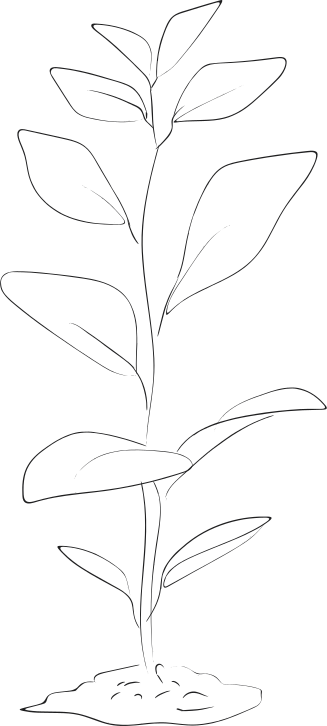
How can the UN Declaration on Future Generations be translated into policy and practice? That was the central question during the inspiring roundtable discussion that Amsterdam UMC organized during the Future Fest for (international) scientists, politicians, policymakers, and civil society organizations (June 19, 2025). Read the summary

From caring about the future to caring for the future: this requires support and action at all policy levels. In this city, in the Netherlands, and internationally. As a knowledge institute, Amsterdam UMC contributes to this movement. By sharing scientific insights about health, by raising public awareness, and by working (together) on practical solutions.
Click on the tree rings to see what steps have already been taken.






Amsterdam UMC does not only focus on today's patients. We also aim to reach a broader population, now and in the future, to prevent these people from becoming patients.
Our ambition is to contribute to the transition towards a healthy and sustainable future. Creating an environment in which everyone can develop to their full potential. This requires knowledge about how we can include the interests of future generations in our policies and actions today. We want to generate this knowledge and share it with health professionals, researchers, policymakers, and the general public. Also, we want to actively use this knowledge to have an impact on society, now and in the future.
Pediatric intensivist Berber Kapitein of the Emma Children's Hospital at Amsterdam UMC conducted research into the living conditions of children with severe asthma. Her findings show that these children are notably more likely to come from low-income households, have a migration background, or live in rental housing. Berber advocates that treatment of children with severe asthma should not focus solely on medication, but also on their living conditions, in order to provide more tailored care. She calls for increased awareness among both physicians and policymakers of the risks that can cause or exacerbate asthma.
Meeting with alderman Alexander Scholtes, Tessa shared these insights about the importance of the first 1000 days and Solid Start. Researcher Wilma Waterlander from Amsterdam UMC presented her team's findings of the (un)healthy food offered in supermarkets in Amsterdam. Researcher Coosje Dijkstra also talked about her studies in Amsterdam New West of what young parents need to give their children a healthy start.
“Making healthy choices must also be made possible”, emphasizes Waterlander. “In prevention policy, we need to shift the focus from the individual to the environment and to the system that creates an unhealthy environment.”
Amsterdam UMC is working together with the Municipal Health Service (GGD) of Amsterdam on the Solid Start program. In addition to the national program, Amsterdam offers free of charge maternity care to families experiencing financial difficulties. In an additional pilot project, families with children in the first 1000 days of life are given priority for debt assistance. Both are examples of measures that can contribute to a healthy and safe start for children and require good collaboration between the social and medical domains.
How does Amsterdam UMC contribute to this?
These collaborations are not only about providing good care to today's patients. They are also about preventing people from needing care in the first place. As part of this social mission, Amsterdam UMC works together with the municipality of Amsterdam and the Municipal Health Service (GGD).
‘Where you were born should not determine your health. But it does. That is why we are doing everything we can to reduce those differences.’
Hans van Goudoever, pediatrician and chair of the board of directors of Amsterdam UMC
‘This means always taking into account the interests of 'the other': people elsewhere in the country or the world, or future generations’
State of the Region 2023: speech Femke Halsema, Mayor of Amsterdam
Regional collaboration is essential for accessible, affordable, sustainable, and high-quality healthcare. Amsterdam UMC works closely with other healthcare providers, municipalities, and social organizations forming networks and strategic alliances.
Tessa Roseboom, Future Generations Commissioner at Amsterdam UMC, is one of the initiators and ambassadors of the national program Solid Start (Solid Start) of the Ministry of Health, Welfare and Sport which invests in the first 1,000 days of life. The result: in every Dutch municipality, a network of professionals and organizations is building a coalition to ensure a good start for every child. Roseboom is member and ambassador of the national coalition Solid Start and advised the Public Health Institute on the monitoring of Solid Start. She is applying the lessons learned from the program to build national, European, and global coalitions that invest in healthy future generations.
The Center for Sustainable Healthcare (CvDZ) coordinates and supports all sustainable initiatives at Amsterdam UMC. Examples include making buildings more sustainable, replacing disposable products with reusable ones, and combating medication waste. The CvDZ exchanges knowledge with other Dutch institutions and initiatives in the field of green healthcare. Internally, the CvDZ focuses on raising awareness and providing practical support to the (now more than 70) Green Teams, that carry out sustainability initiatives within their own departments.
In A Healthy Future for All, its strategy for the period up to 2030, Amsterdam UMC explicitly focuses on public health, reducing health inequalities, societal impact, and sustainability.
How is Amsterdam UMC contributing to this?
Mark Monsma, director Healthy Generation
‘Each and every child deserves a healthy future. No matter where you were born, no matter your parents’ income or education. Sadly, this is currently not the case in the Netherlands. We know the environment has an important impact on the choices we make. Investing in a healthy environment and a solid start for every child is crucial. Not only for our health, but also to relieve pressure on the healthcare system and keep our economy running. We need everyone for this. We therefore wholeheartedly support the SER advice. It is crucial that politicians choose healthy future generations.’
The Netherlands faces major challenges in the field of health. Increases in life expectancy have been accompanied by increasing years lived in ill health. Health inequalities are increasing and even within this small country, where you were born affects your opportunities in later life. The environment and climate change affect our health. Increasingly, healthcare needs to be provided by a decreasing number of healthcare professionals. On the other hand, the healthcare sector itself is responsible for approximately 7 percent of the national CO2footprint, 4 percent of waste, and 13 percent of raw material use in the Netherlands. Investments in sustainable healthcare are needed to break this vicious cycle of pollution, negative health effects, demand for healthcare, healthcare-related pollution.
The university medical centers are pooling their knowledge and innovative strength in UMCNL to tackle these societal challenges, jointly and with partners, for current and future generations.
For example, the academic centers, together with partners in healthcare, have signed the Green Deal Sustainable Healthcare 3.0. In this agreement, they have committed to results-oriented action on five main themes for green and climate-oriented healthcare in the period from 2023 to 2026.
‘There is an urgent need for concrete scientific insights, tools to evaluate long-term costs and benefits, and cooperation between science, policy, and society to put the agreements on paper into practice.’
Sandra Pellegrom, national SDG coordinator (2019-2024)
Developments in the field of Wellbeing and the Sustainable Development Goals are monitored annually by Statistics Netherlands (CBS). The most recent monitor (covering 2024) concludes that wellbeing ‘here and now’ increasingly goes at the cost of opportunities for future generations in the Netherlands and elsewhere in the world. If current developments continue, future generations will have lower levels of wellbeing.
(Monitor of well-being and the SDGs 2024 , CBS, 2025).
How is Amsterdam UMC contributing to this?
‘Extensive partnership is needed: between directorates-general, researchers, young people, and creatives. We must employ citizens’ assemblies and intergenerational dialogues to foster greater adaptability and inclusivity.’
Erica Bol, Future Designer at EU Policy Lab
Never before have so many generations lived at the same time. How can the interests of all these generations, as well as future generations, be taken into account in policy and legislation? To this end, the European Commission held a citizens' assembly. Participants from across the European Union were able to discuss topics such as health and education, social cohesion, democracy, and sustainability. This was the prelude to the Strategy on Intergenerational Fairness developed by Glenn Micallef. He is the first ever EU Commissioner for Intergenerational Fairness. His remit is not linked to a single directorate-general but transcends all domains.
Future Generations | March 2026
© Amsterdam UMC 2026
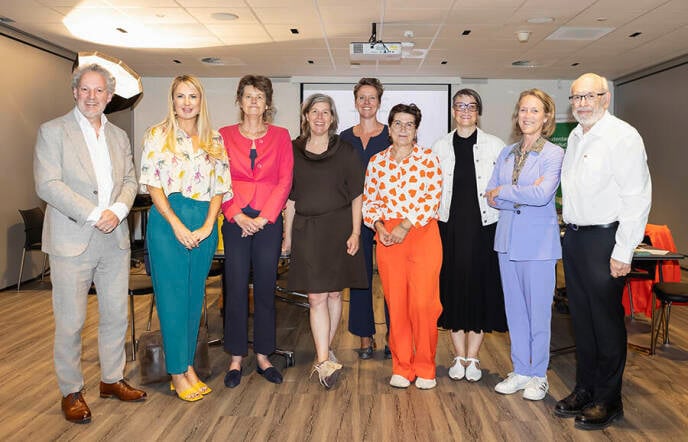
How can the UN Declaration on Future Generations be translated into policy and practice? That was the central question during the inspiring roundtable discussion that Amsterdam UMC organized during the Future Fest for (international) scientists, politicians, policymakers, and civil society organizations (June 19, 2025). Read the summary
Amsterdam UMC was the first organization in the Netherlands to appoint a Commissioner for Future Generations Tessa Roseboom. At the United Nations Summit of the Future in New York (2024), where the UN Declaration for Future Generations was signed, she shared her vision on that assignment:
“If we want to safeguard the health of future generations, we must build a healthy environment in the present, where those generations will be shaped. That means increasing our focus on prevention and ensuring that people have a fair chance to grow up in a healthy and safe environment. Investing in human potential from the very beginning is the smartest investment we can make from a humanitarian and economic perspective.”
‘This is the first time that so many countries, at the highest political level, have committed to taking the interests of future generations into account in their policies and decision-making.’